Soft
Drawings, unglazed paper, textiles. A large cell that does not print the surface.
- For
- Paper, cloth
- Not for
- Glazed panels
Port/Foam
Archival polyethylene
Pale foam, three densities. Soft for paper, museum for framed work, rigid for stone and glaze that cannot flex.
Cell size
The block on the right is a sketch of the cell, not a job. The packing note takes the density you pick.
Museum polyethylene — framed works, objects with a skin.
Three densities
We will say which, and why, on the packing note.
Drawings, unglazed paper, textiles. A large cell that does not print the surface.
Framed works and objects with a skin. The default on this bench.
Stone, metal, glazed panels that cannot flex. The pocket still fits; the wall does not give.
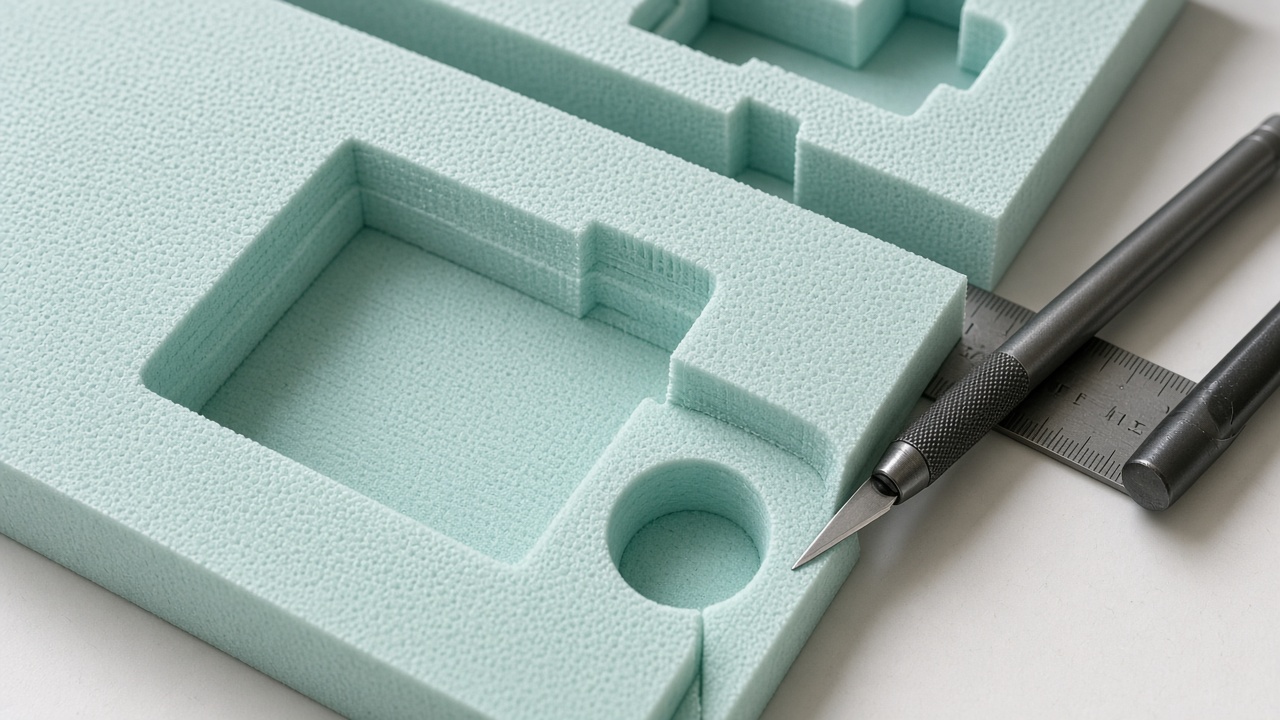
How a cavity is cut
The object, not the crate. Glazing on or off.
Soft, museum, or rigid. We will say which.
The foam is cut to the object. Nothing is poured and hoped.